
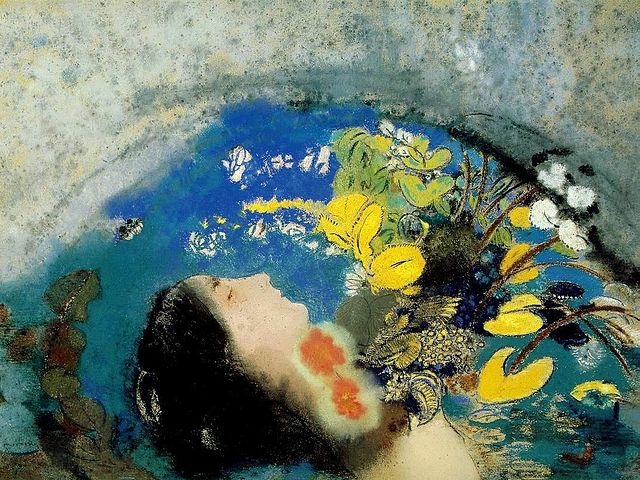
Young singers often make the mistake of applying what they assume is a style to a song because of the period that it is from, for instance here, the late Romantic period, or they have heard a singer’s recording that is idiosyncratic. Sometimes a student might have a score that is a “student edition” (i.e. cheap), or perhaps more nicely put, less than an Urtext edition. Good news! There is a brand-new five-volume set of the complete songs and vocalises of Gabriel Fauré, by Roy Howat and Emily Kilpatrick. It is the only complete critical edition and based on the study of hundreds of manuscript and printed sources.
But back to style, it is important to learn what the composer wanted in the performance. A little research goes a long way!
In their article, “Editorial Challenges in the Early Songs of Gabriel Fauré,” published in the Music Library Association’s Notes publication, Vol. 68, No. 2 (December 2011), Howat and Kilpatrick remark:
Witness accounts of Fauré’s playing and interpretative wishes convey a matching assumption of forward motion, along with a distaste for any gratuitous slowing, rubato, or any sort of sentimental affectation. When the mezzo-soprano Claire Croiza asked him how he wanted “Après un rêve” to be sung (after they had heard an exaggeratedly languorous performance), he [Fauré] replied simply “Sans ralentir, sans ralentir, sans ralentir.” (Without slowing down.)
This is not to say that interpretation by an artist is not allowed. Study the text intensely. Make a word-for-word translation – don’t make it fancy or poetic – so that you know what each word means and what you are singing about. Speak the text slowly and deliberately many times and then begin to speak the text in rhythm. While this might seem tedious, the end result will be that you become organically enmeshed in the text as well as in the notes. It is only then that “interpretation” has its genesis.
Pierre Bernac, arguably the most renowned interpreter of the French Art Song (Mélodie), talks about performance and interpretation in his seminal book, “The Interpretation of French Song,” saying:
A work of music – which is a creation in time, as opposed to a work of plastic art, which is a creation in space – comes into actual existence through the performance of the interpretative artist; but unless the work is an improvisation of the artist, it is necessarily the performance of a work already conceived by the composer and notated on paper. The signs penned on paper, however, are mere symbols; the actuality of the sound is totally absent from them. In the art of music, it is the interpreter’s performance which we come to regard as the work itself. … But conscientious performers know well how difficult it is [to observe this scrupulous accuracy, this precision.] There are so many things to be observed: indications of tempi, precision of rhythm, of value (values of the notes, values of the rests), the accents, the dynamics, the phrasing, the nuances, etc. It can be said that one never reads the score with sufficient care.
Of “Après un rêve,” Bernac says:
The purists may think that the accompaniment of this mélodie is too simple, with its repeated chords; but the harmonies are refined and support the most exquisite melodic line which, with its apparent Italian facility, never loses its serene loftiness. This is enough to indicate to the singer that, although he has to sing this mélodie with a true and beautiful bel canto line, his style must be always perfectly controlled.
With all of this in mind, listen to the BabelGuide of “Après un rêve,” beautifully recited by Raphaël Treiner, with a word for word translation and IPA transcription by Bénédicte Jourdois.
Available for sale through the SingersBabel website or app, or by subscription. https://www.singersbabel.com/marketplace/ProductDetail.aspx?pid=2924&sch=Apr%c3%a8s%20un%20r%c3%aave
Resources:
Gabriel Fauré “Complete Songs,” Volume 1 (34 Songs), edited by Roy Howat and Emily Kilpatrick, available through Classical Vocal Rep
http://www.classicalvocalrep.com/products/Gabriel-Faure-Complete-Songs-Volume-1-34-Songs-High-Voice-205406.html
Pierre Bernac, “The Interpretation of French Song”
https://www.amazon.com/Interpretation-French-Norton-Library-Paperback/dp/0393008789
Text and Translation: http://www.lieder.net/lieder/get_text.html?TextId=18170
 SingersBabel Blog